Many business owners and creators still often get confused in understanding the types of Intellectual Property (IP). Not a few assume that registering a brand name automatically provides copyright or protects it from imitation by business competitors. In fact, each Intellectual Property Right (IPR) instrument has different objects of protection, functions, and legal mechanisms.
Understanding the fundamental differences between Trademarks, Copyrights, Patents, and Trade Secrets is a crucial first step to securing your company's intangible assets from the risk of piracy or plagiarism.
Summary of the Main Functions of 4 Intellectual Property Types
In general, intellectual property protection is distinguished based on the object of the work being protected:
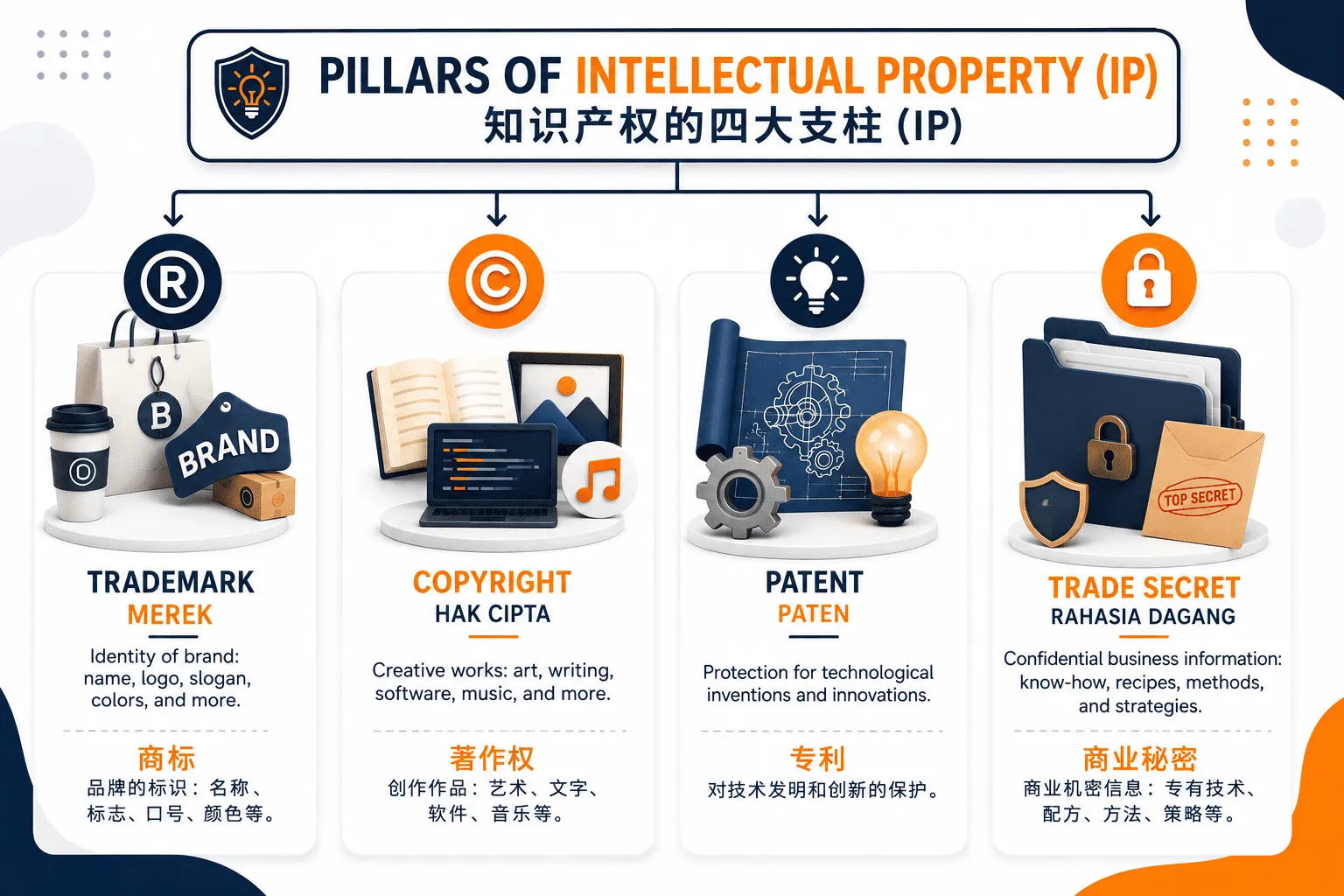
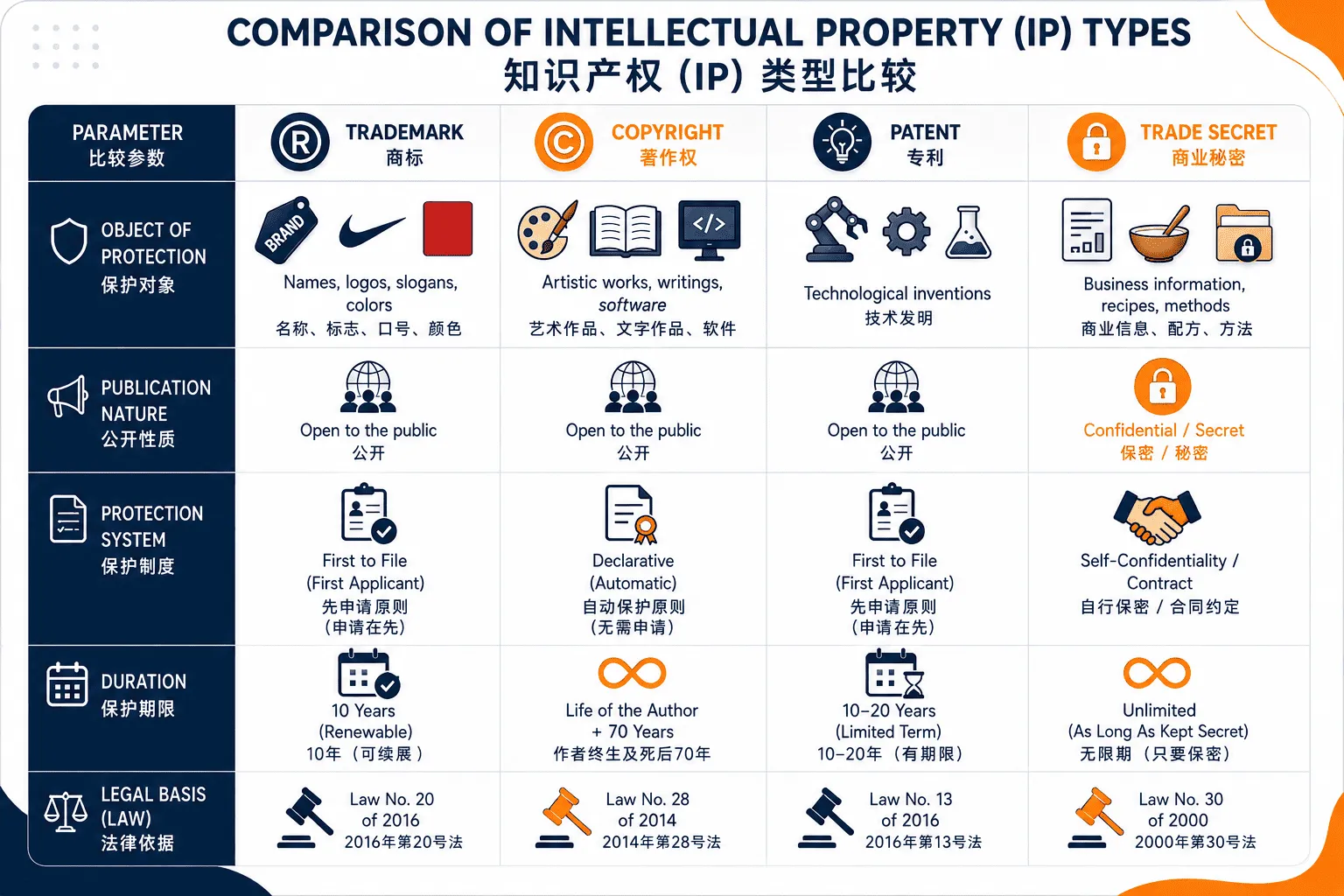
- Trademark: Protects the commercial identity of a business (name, logo, slogan, symbol).
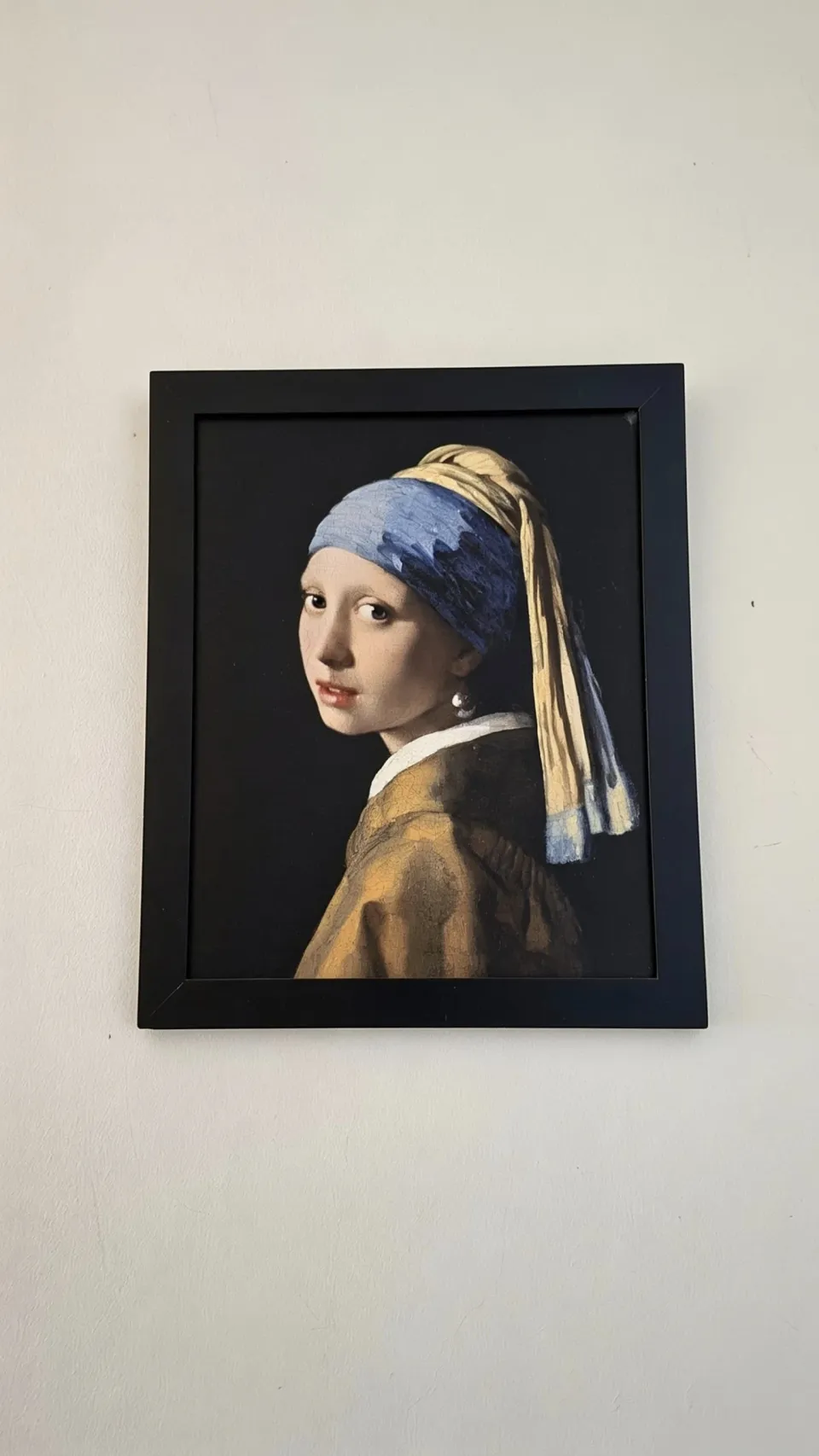
- Copyright: Protects creations in the fields of science, art, and literature (books, music, software, graphic design).
- Patent: Protects inventions or new technological discoveries in the industrial field.
- Trade Secret: Protects confidential business information that has economic value and is not known to the public (recipes, algorithms, databases).
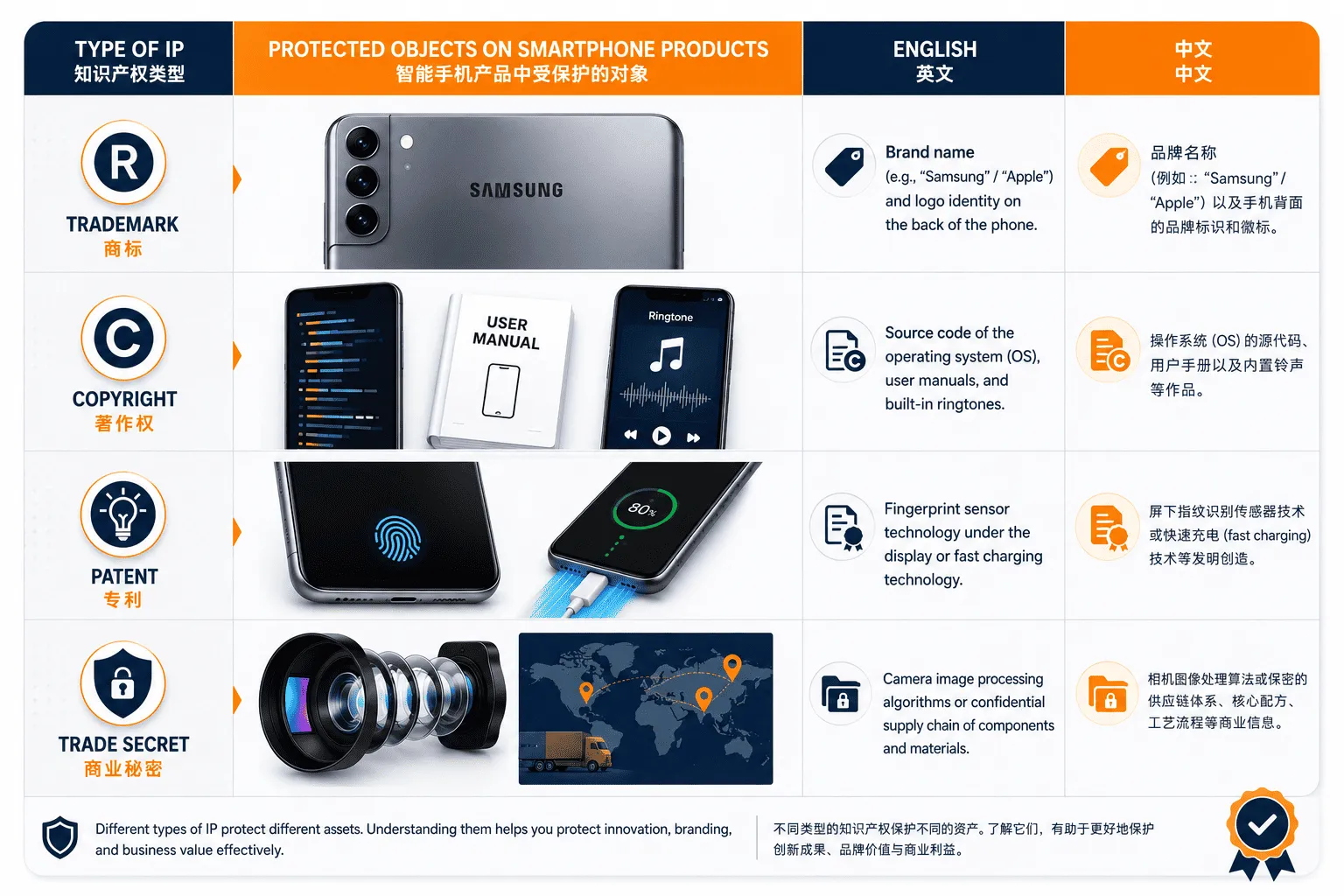
Case Study: Real Examples in a Single Product
To make it easier to understand, imagine a Smartphone sold on the market. In a single unit of this product, these four types of Intellectual Property work simultaneously:
Detailed Explanation & Characteristics of Each IP
1. Trademark
A trademark serves as the primary differentiator between your product and competitors in the market. Trademark registration provides the exclusive right to use the name or logo in the trade of goods/services.
- Protection Period: 10 years from the date of receipt and can be renewed indefinitely.
- Related Service: Register your brand identity through Trademark Registration Services.
2. Copyright
Copyright arises automatically (declaratively) after a work is manifested in a tangible form. Copyright protects the expression of an idea, not the idea itself.
- Protection Period: The lifetime of the creator plus 70 years after the creator's death (for individual creations).
- Related Service: Protect your written works, applications, or unique content through Copyright Services.
3. Patent
A patent is granted by the state to an inventor for their invention in the field of technology that contains inventive steps and can be applied in industry.
- Protection Period: 20 years for Regular Patents and 10 years for Simple Patents (non-renewable).
4. Trade Secret
Unlike Trademarks or Patents which must be published in the state gazette, Trade Secrets are not published. Protection arises as long as the owner maintains the confidentiality of the information through internal procedures such as Non-Disclosure Agreements (NDA).
- Protection Period: Unlimited, as long as the information remains confidential.
- Related Service: Establish a legal framework for securing your business information through Trade Secret Services.
Complete Comparison Table of Trademarks, Copyrights, Patents & Trade Secrets
FAQ About Intellectual Property
Does PT registration automatically protect my brand name?
No. The ratification of the company name at the Ministry of Law and Human Rights only protects the legal entity name, not your product's trademark name. The brand name must still be registered separately with the Directorate General of Intellectual Property (DJKI).
What happens if a Trade Secret is leaked?
If the leak is caused by a breach of confidentiality agreement (NDA) or theft by external parties, the Trade Secret owner can file a civil lawsuit for damages or criminal charges in accordance with applicable regulations.
Can one logo be registered as both a Trademark and a Copyright?
Yes. A company logo can be registered as a Trademark to secure its product differentiation function in the market, and simultaneously recorded as a Copyright for graphic artwork to secure ownership of its visual artistic work.
Secure Your Business Intellectual Assets with Awan Kusuma Legalitas
Neglecting intellectual property protection can have fatal consequences for business sustainability, ranging from the risk of compensation claims to the necessity of rebranding a name already known to the public.
The Awan Kusuma Legalitas consultant team is ready to help map and protect your company's entire intellectual asset portfolio in an integrated manner, starting from PT Establishment, Trademark registration, Copyright recording, to the preparation of Trade Secret protection documents.
Want to consult about your brand protection and business intellectual assets? Contact the Awan Kusuma Legalitas Team via WhatsApp now for an integrated consultation session!