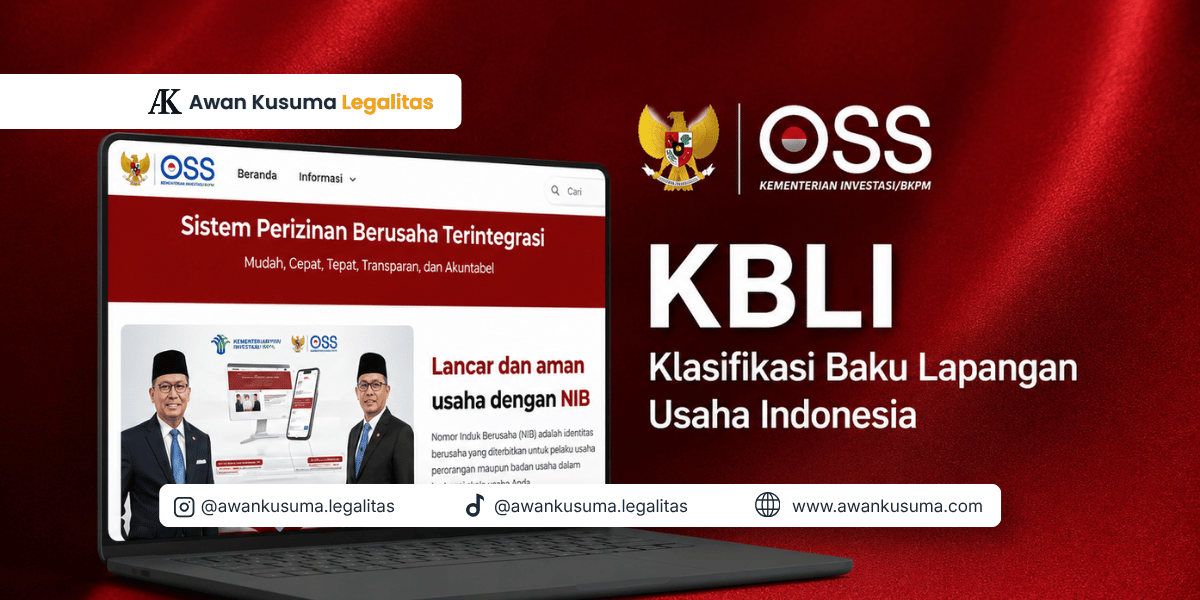
For those of you running a business in Indonesia, accurate business legality is the main foundation for smooth operations. Entering 2026, the business world in the country faces a highly crucial regulatory update regarding business classification. The government has officially implemented KBLI 2025 as the new standard reference for economic sectors.
The urgency of this update must not be ignored by business actors, whether MSMEs or large corporations. In fact, the system integration deadline set by the government has passed. If you have not made adjustments, your business activities and licensing in the OSS (Online Single Submission) system risk experiencing administrative obstacles.
What are the details of this latest regulation and what concrete steps must you take now? Read the following complete guide on the changes to KBLI 2025 and how to migrate from the KBLI 2020 code.
What Is KBLI 2025 and Why Does It Replace KBLI 2020?
The Klasifikasi Baku Lapangan Usaha Indonesia (KBLI) is the standard guide used to classify Indonesian economic activities into several business fields. This code serves as the basis for issuing the Nomor Induk Berusaha (NIB) and other operational licenses on the OSS RBA platform.
Legal Basis of KBLI 2025
The implementation of this new standard has a strong and binding legal basis. KBLI 2025 was officially established through Regulation of the Central Statistics Agency (BPS) No. 7 of 2025 ratified on December 18, 2025. This latest regulation is here to replace the validity of KBLI 2020, which is considered no longer relevant to current industry dynamics.
Reasons Behind the KBLI Standard Change
The government is updating this classification code not without reason. The following are several main factors driving the birth of the latest classification code:
- Accommodating Digital Industry Modifications: The emergence of new business models, artificial intelligence (AI) technology, and the blockchain ecosystem that were not specifically accommodated in 2020.
- Synchronization with International Standards: Aligning the classification of domestic economic activities with prevailing global international standards (International Standard Industrial Classification / ISIC).
- Simplification of Licensing Bureaucracy: Assisting the Online Single Submission (OSS) system in mapping business risk levels more accurately and from a better perspective.
Key Points of the KBLI 2025 Changes That Business Owners Must Know
The shift from the 2020 version to the 2025 version brings many structural code changes across various sectors. For those of you who own existing companies, re-checking the five-digit codes in your NIB is something you must do now.
1. Reclassification and Splitting of Business Sector Codes
In KBLI 2025, many business codes have been split into more specific ones, or conversely merged. For example, the e-commerce trade sector, information technology services, and the creative industry now have new sub-categories that separate platform providers, content creators, and technical infrastructure providers.
2. Adjustment of Business Risk Levels (OSS RBA)
Code changes automatically affect the risk level assessment (Low, Medium Low, Medium High, or High) in the OSS system. If your business code changes, the requirements for secondary documents such as the Standard Certificate or environmental permits (AMDAL/UKL-UPL) may also change.
Important Warning: The deadline for ministries, institutions, and the OSS & AHU systems to fully switch to KBLI 2025 is no later than June 18, 2026. Because that deadline has now passed, business accounts that have not migrated may face a temporary suspension status or rejection when applying for new licenses.
Impact If Your Business Is Late in Migrating to KBLI
Delaying the adjustment of your company's legality codes can trigger various detrimental domino effects on your business operations. The following are several real impacts that often occur in the field:
Obstacles to AHU and OSS System Integration
The General Legal Administration (AHU) system at the Ministry of Law and Human Rights and the OSS system of BKPM are now fully integrated using the KBLI 2025 database. If your company's Articles of Association (AD) data at AHU still lists old version codes, you will not be able to synchronize data or update your NIB on the OSS platform.
Obstacles in the Tender and Partnership Process
For companies that frequently participate in government or private goods/services procurement tenders, the validity of the NIB is non-negotiable. A mismatch between the business code and the latest BPS regulation will immediately disqualify your company at the administrative selection stage.
How to Migrate from KBLI 2020 to KBLI 2025 in the OSS System
This transition process requires careful attention so as not to change the main legality structure that is already established. In general, there are two migration paths depending on your business entity type:
[Check New Code Compatibility] ➔ [Revise Articles of Association at AHU (If PT)] ➔ [Update Data in the OSS System] ➔ [Print New NIB]
Step 1: Identify and Check Code Compatibility
The first step is to carry out mapping. You must match your old KBLI 2020 code with the official conversion draft issued by BPS to find the equivalent code in the 2025 version.
Step 2: Adjustment of Articles of Association (Specifically for PT and CV)
If your business is in the form of a Perseroan Terbatas (PT), this change must go through the mechanism of a General Meeting of Shareholders (RUPS) or a Circular Resolution of Shareholders. A notary will register the amendment to the Articles of Association in the AHU system of the Ministry of Law and Human Rights to obtain the amendment decree (SK).
Step 3: Data Update on the OSS Portal
After the data in the AHU system is updated, the next step is to log in to your company's OSS RBA account:
- Go to the business licensing submission page.
- Select the option to develop or change business data.
- Pull the latest data from AHU or enter the new KBLI 2025 code manually (for sole proprietorships).
- Complete the working capital parameters, activity description, and number of workers again.
- Click save and issue the updated NIB (Nomor Induk Berusaha).
If you find this bureaucratic process confusing or do not have free time to handle it, you can use professional assistance through OSS NIB processing services so that the legality transition process runs quickly and is free from data input errors.
FAQ: Common Questions about KBLI 2025
Are all companies required to change their KBLI in 2026?
No. The implementation of KBLI 2025 does not automatically require all companies to change codes manually or obtain new licenses. If there is no change in the substance of the business, code conversion is carried out through the system in accordance with the applicable mechanism.
Is the old NIB still valid after KBLI 2025 is implemented?
Yes. BPS affirms that licenses issued before the implementation of KBLI 2025 remain valid. If there is a change in the substance of business activities, the company needs to check the need for data and licensing adjustments.
Is the June 18, 2026 deadline the migration deadline for all companies?
No. That deadline relates to the OSS and AHU system adjustment schedule announced by the government. That deadline does not mean every company is required to change codes manually before that date.
How do I check the new KBLI 2025 code?
Open the KBLI 2020 to KBLI 2025 Conversion facility in OSS, then search for the old code or business activity name. Check the conversion status and description of the destination code before determining the next action.
Does a KBLI change always require a notarial deed?
No. Code conversion that does not change the substance of the business does not automatically require an amendment to the Articles of Association. If there is a change in the intent and purpose or scope of business activities, the need for document changes must be assessed based on the applicable provisions.
Will companies that have not changed their KBLI code be suspended or lose their NIB?
It is not appropriate to conclude that solely based on the failure to change codes manually. BPS states that old licenses remain valid and conversion is carried out through the system if there is no change in the substance of the business. Check the status of the company's data through OSS and the relevant official provisions.
Does KBLI determine the business risk level?
KBLI is one of the bases for identifying business activities in risk-based licensing. The applicable requirements must be checked based on the activity classification, scope, and related licensing provisions. A code change does not always mean that all requirements automatically change.
When does a company need to make adjustments in OSS or AHU?
Adjustments need to be checked if there is a change in the substance of the business, such as a change in the intent and purpose or scope of business activities. The required procedure depends on the business form, type of change, and applicable provisions.
Need Help Checking Your Company's KBLI?
Understanding the conversion from KBLI 2020 to KBLI 2025 can be a challenge when a company has several business activities, old codes that are split into several new classifications, or legality documents that need to be aligned.
Awan Kusuma Legalitas helps business actors check the compatibility of KBLI codes, review the need for OSS and AHU data adjustments, and assist with legality processing if there are changes in business activities.
Before making document changes, first make sure whether the company only needs a review of the conversion results or actually requires legality adjustments.
Contact Awan Kusuma Legalitas for consultation regarding KBLI, NIB, OSS, and business data changes.
Disclaimer: This article is for informational purposes and is not legal advice. Administrative provisions and mechanisms may change. Always check the latest information from BPS, OSS, AHU, and the authorized agencies before taking action.