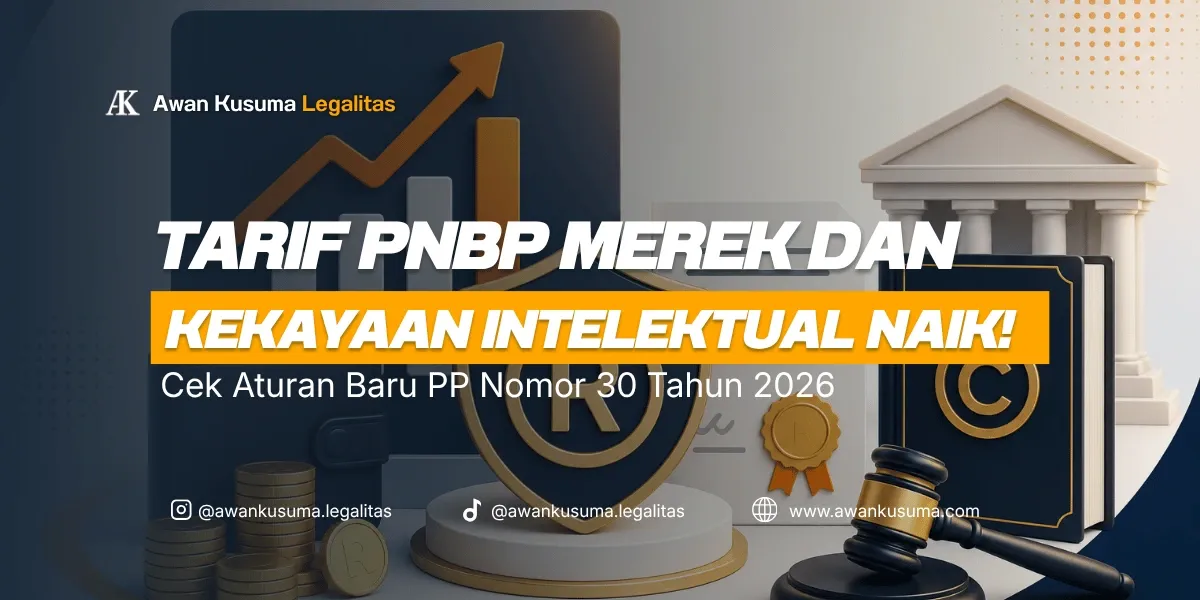
Many business owners have responded to the news of increased trademark registration fees with concern. However, when examined from the perspective of legal practitioners, Government Regulation No. 30 of 2026 — which officially replaces PP No. 45 of 2024 — is not merely a government tariff hike, but rather a moment for cost efficiency that needs to be approached with the right strategy.
List of Latest Intellectual Property PNBP Tariffs (PP No. 30 of 2026)
The government has officially issued Government Regulation Number 30 of 2026 concerning the Types and Tariffs of Non-Tax State Revenue (PNBP) Applicable at the Ministry of Law and Human Rights.
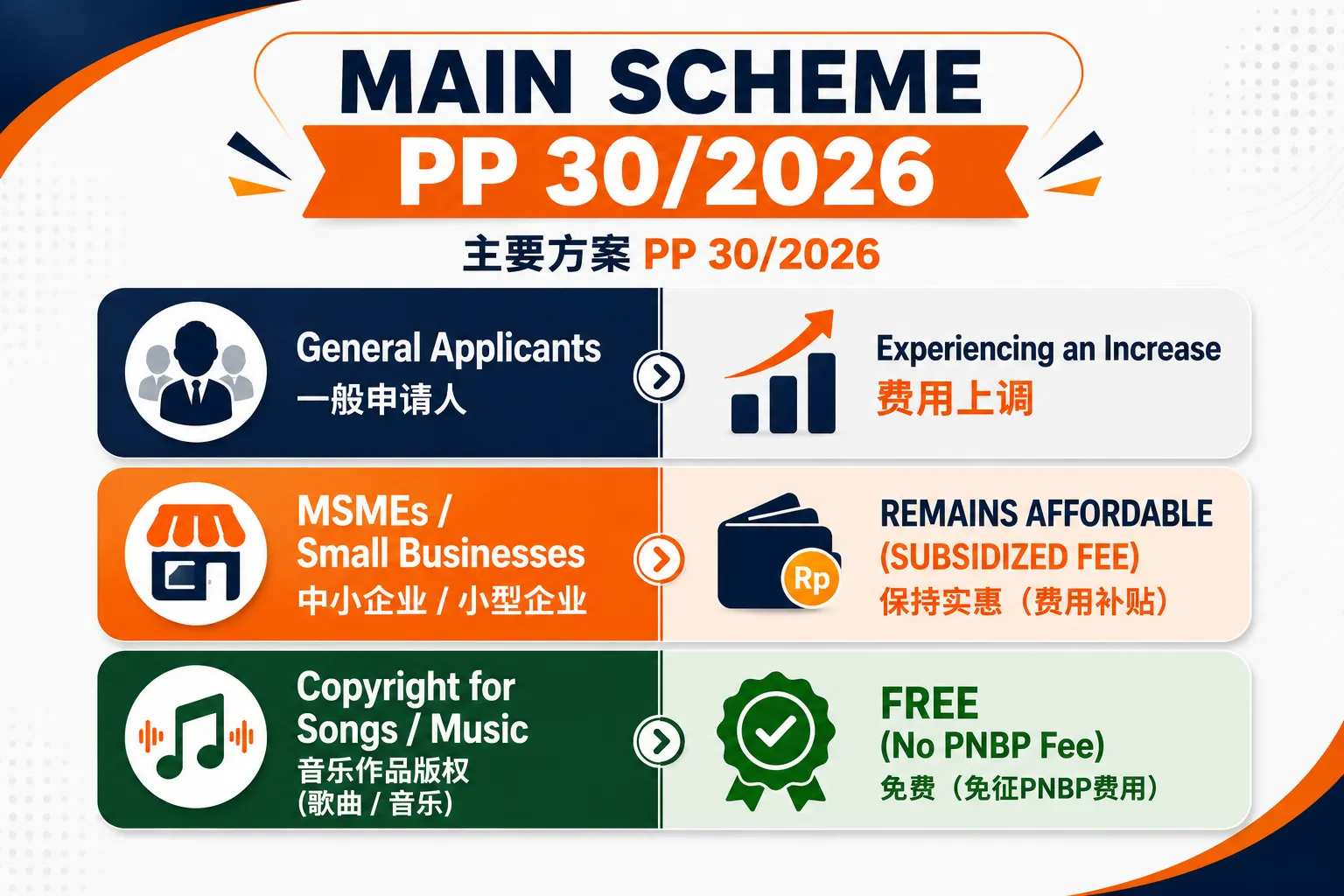
This new regulation introduces a very clear tariff separation scheme between General Applicants (Large Companies/Non-UMK) and Micro and Small Enterprises (UMK), as well as a breath of fresh air for music creators.
Below is a comparison of the Intellectual Property PNBP tariff adjustment scheme under PP No. 30 of 2026:
Why Does the General Category Tariff Increase Actually Become Good News for the Business World?
The PNBP tariff adjustment for the general category is a step to evaluate the implementation of registrations at the Directorate General of Intellectual Property (DJKI). This policy actually brings two positive impacts that benefit serious business actors:
1. Curbing Brand Squatting Practices
The adjusted registration fees effectively filter out speculative parties who deliberately register hundreds of promising brand names just to resell them (speculative registration).
2. Accelerating the Substantive Examination Process at DJKI
The allocation of increased PNBP is focused on IT system automation and the addition of professional trademark examiners. This targets making the brand certification process much faster than the previous standard timeframe.
For companies that routinely protect their intangible assets, this adjustment is commensurate with the guarantee of legal certainty and faster trademark protection from the risk of being seized by other parties.
Tactical Steps to Secure Your Brand Without Budget Inflation
Given the dynamics of these regulatory changes, there are three concrete steps that business owners and internal legal teams can take to reduce business expenses:
1. Submit Your Application Before August 1, 2026
If your brand name, logo, and supporting documents are ready but not yet registered, immediately file a registration through trademark registration services before August 1, 2026, to take advantage of the old tariff scheme.
2. Maximize the Micro and Small Enterprise Special Lane Facilities
The government continues to provide protection in the form of special subsidized tariffs for UMK scale businesses. Ensure your business legality has been verified by having an NIB (Business Identification Number) or through establishing a Sole Proprietorship PT to obtain access to this facility.
3. Precisely Map Your Brand Classes and Other Intellectual Property Assets
Do not register irrelevant goods or services classes just to be safe. Conduct an audit of your products to determine whether you need trademark registration or industrial design protection, so that licensing cost allocation is targeted and cost-efficient.
Frequently Asked Questions About PP No. 30 of 2026 (FAQ)
1. When does PP No. 30 of 2026 officially take effect?
PP No. 30 of 2026 was officially promulgated and takes effect starting August 1, 2026.
2. Will trademark registration fees for MSMEs also increase?
No. Trademark registration fees for Micro and Small Enterprises (UMK) continue to receive special subsidized rates, provided that they attach a UMK Certificate and the appropriate NIB RBA.
3. What if a trademark application is submitted before August 1, 2026?
All applications submitted and receiving a billing code before August 1, 2026, will still use the previous tariff regulation provisions.
4. What are the main requirements to register a trademark through the UMK facility lane?
You must have a Business Identification Number (NIB) with a Micro or Small business scale and a stamped UMK Statement Letter in accordance with the standard DJKI format.
Let's Secure Your Business Brand Rights Together with Us
Trademark registration is not just about paying PNBP to the state, but also ensuring that a proper brand search analysis is conducted so that your application is not rejected by the examiner. The tariff changes make the risk of registration failure even more costly.
Our professional team is ready to assist you with brand search analysis, business class mapping, and efficiently completing your business licensing requirements.
Want to lock in the old tariff before August 1, 2026, or take advantage of UMK facilities?
Contact Awan Kusuma Legal Consultant via WhatsApp now for a quick consultation, official price quotes, and a free brand search evaluation