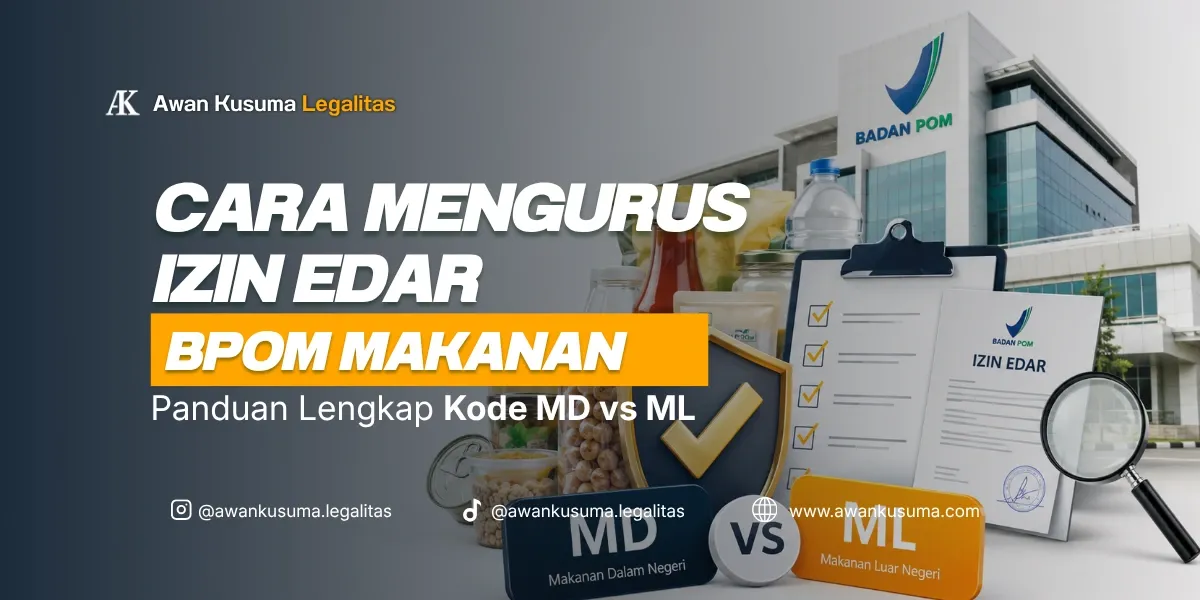
Having a food or beverage product that is in high demand is a great first step. However, once your business begins to enter modern retail networks, supermarkets, or large-scale e-commerce, legality becomes an absolute non-negotiable requirement. Every processed food product circulating in Indonesia must hold a BPOM marketing authorization to be legally sold and to gain full consumer trust.
Many business actors, especially MSMEs and processed food importers, feel confused when they have to determine the appropriate registration type for their products. Choosing the wrong registration path from the start can result in file rejection by the evaluator and waste considerable time and money.
This article will thoroughly dissect the fundamental differences between the BPOM MD and BPOM ML codes, their registration flows, and the mandatory document checklist to ensure your product licensing process runs smoothly.
Main Difference: BPOM MD vs BPOM ML
The first thing you must understand before registering your product is identifying where the product is manufactured. The Food and Drug Supervisory Agency (BPOM) divides the registration categories into two types:
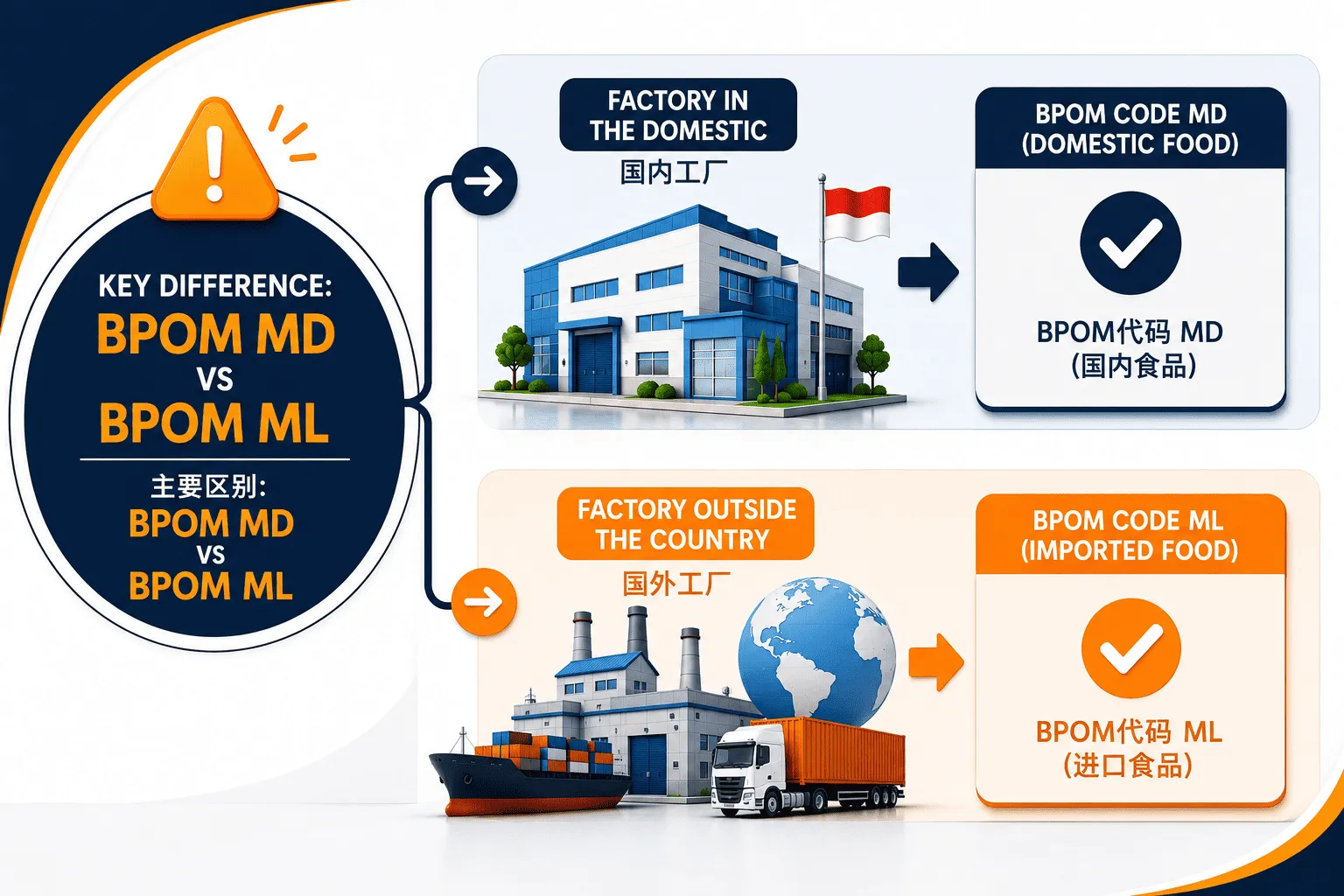
- BPOM MD (Domestic Food): Intended for processed food products produced by domestic industries, whether MSMEs or large-scale industries.
- BPOM ML (Foreign/Imported Food): Intended for imported processed food products produced abroad, then brought into and circulated within Indonesian territory by authorized distributors.
Both distribution permit codes are valid for 5 years and must be renewed before their validity period expires to ensure the products remain legally and safely on the market.
Registration Document Requirement Checklist
To expedite the evaluation process on the BPOM e-registration portal, make sure you have prepared all supporting documents according to the submitted product category.
1. General Administrative Requirements
- Risk-based Business Identification Number (NIB) from the OSS system that includes the relevant food industry KBLI code.
- Active Corporate or Individual Taxpayer Identification Number (NPWP).
- Accredited Laboratory Analysis Report (Certificate of Analysis) for the final product sample.
- Product label and packaging design in accordance with BPOM standards (containing product name, composition, expiry date, net weight, and nutritional value information).
2. Specific Additional Documents for BPOM MD (Local Products)
- Production Facility Inspection (PSB): A recommendation letter from the local POM Center (Balai POM) in the factory's domicile area regarding the audit results of production facilities.
- A sequential production process flow, from raw materials to finished goods.
3. Specific Additional Documents for BPOM ML (Imported Products)
- Original Letter of Appointment from the foreign manufacturer to the license holder in Indonesia.
- Health Certificate or Free Sale Certificate issued by the competent authority from the country of origin.
- GMP (Good Manufacturing Practice) or ISO 22000 certificate belonging to the relevant foreign factory.
Online BPOM Food Registration Flow (e-Registration)
Currently, the entire distribution permit registration process is carried out centrally and transparently through the BPOM e-reg system application. The licensing stages are divided into two main phases:
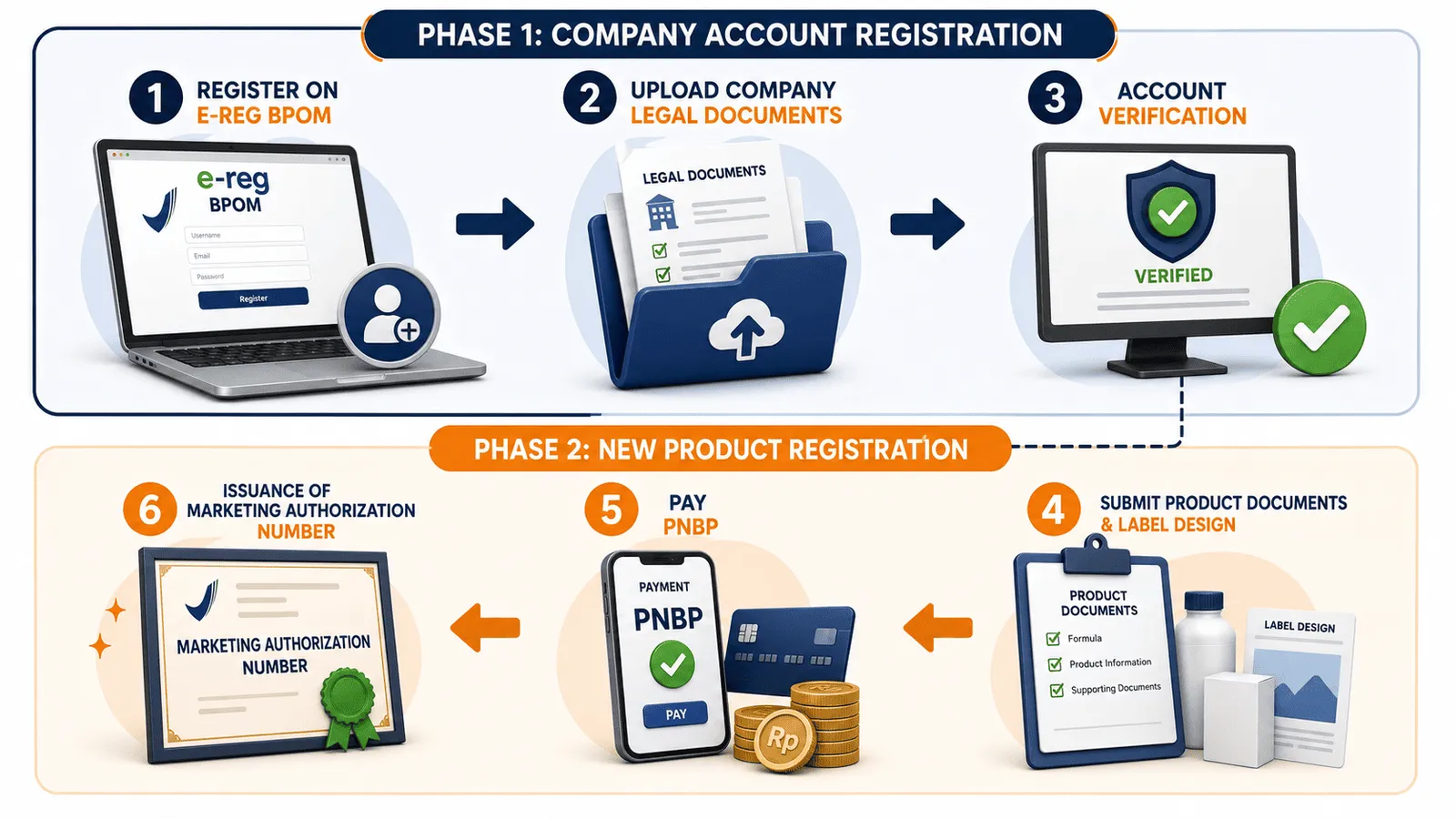
- Step 1: Company Account Registration
Applicants register an official company account on the BPOM e-reg portal by uploading NIB, NPWP, and facility audit documents (PSB for MD) or a Letter of Appointment (for ML). After verification by the officer, you will receive a User ID and password. - Step 2: New Product Registration
Use the active account to register your product variant details, ranging from ingredient composition, packaging specifications, to uploading the label design draft. - Step 3: PNBP Payment & Document Evaluation
After the documents are submitted, the system will issue a Payment Order (SPB) for Non-Tax State Revenue (PNBP) fees. The official PNBP tariff for new product registration varies from IDR 200,000 to IDR 3,000,000 per product, depending on the risk level of the processed food. - Step 4: Issuance of Distribution Permit Number (NIE)
The BPOM evaluator team will examine the safety and feasibility of the product. The estimated processing time for permit issuance ranges from 14 to 150 working days, depending on the product's risk level (low, medium, or high risk). Once approved, the official Distribution Permit Number will be issued electronically.
FAQ: Popular Questions About BPOM Distribution Permits
Is a home‑scale MSME product still required to register for BPOM MD?
If your product is classified as a processed food with medium to high risk, has a shelf life of less than or more than 7 days, and uses final packaging sold at retail, then it is mandatory to obtain a BPOM MD distribution permit number and cannot rely solely on a P‑IRT permit.
How long is the BPOM distribution permit valid?
Both BPOM MD and ML distribution permit certificates are valid for 5 years. You can apply for account and product renewal online starting 6 months before the validity period expires.
What are the consequences of selling food without an official distribution permit?
Under Law Number 18 of 2012 concerning Food, trading processed food without an official BPOM distribution permit may result in administrative sanctions, product withdrawal from the market, and even criminal penalties.
Ensure Your Food Distribution Permit Is Issued Without Obstacles
Ensuring that all BPOM registration documents comply with applicable technical regulations is the best investment for the sustainability of your business. Minor errors in designing the label or mismatches in the KBLI code on your NIB are often the main reasons why your registration files are held up for months.
For local manufacturing companies as well as imported product distributors who want to cut through bureaucracy and accelerate the issuance process of official certificates, our expert team is ready to assist you through our professional and transparent BPOM Food services. We are ready to oversee your product legality processing from the initial verification stage until the distribution permit number is legally issued.
Not only that, we can also help organize all of your early business legality requirements, starting from NIB and OSS management services to fulfilling commitments at the Ministry of Industry through your SIINAS account. With neat and structured legality governance, your food product business is ready to expand safely in the national market.
Don't let licensing obstacles hinder the distribution of your food products in the market. Contact Us via WhatsApp now for a free consultation and the best BPOM distribution permit processing for your business!