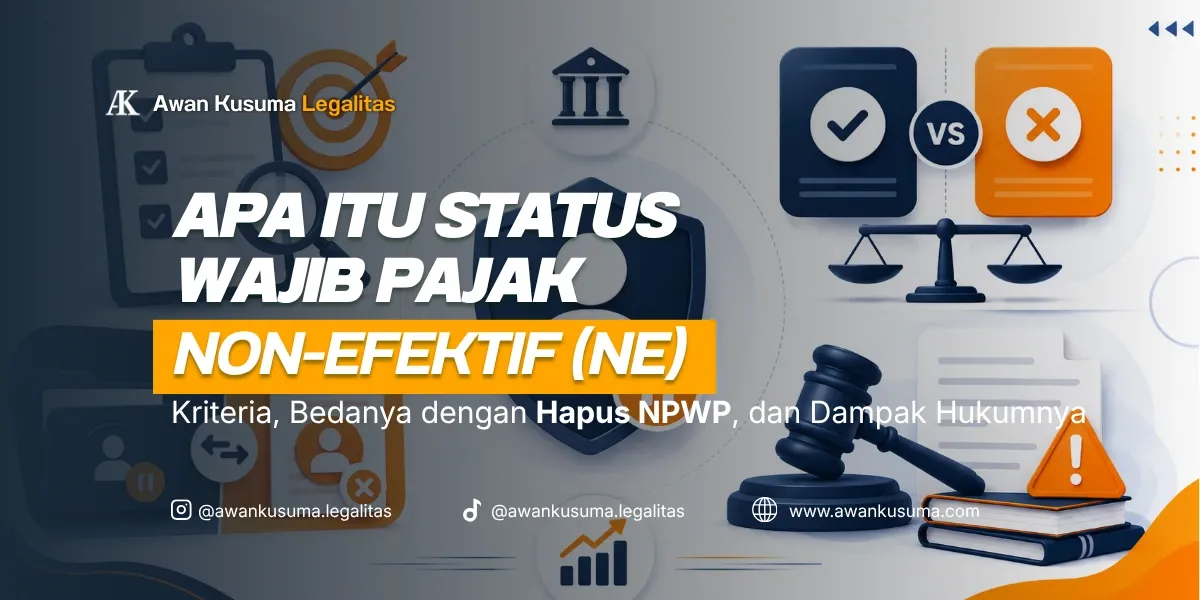
Not all business entities or holders of a Taxpayer Identification Number (NPWP) have continuously active economic activities. In certain conditions, such as a company temporarily ceasing business operations or being in the process of dissolution, the Directorate General of Taxes (DJP) provides an administrative adjustment mechanism known as Non-Effective Taxpayer (NE) status.
Through tax regulatory adjustments and the integration of the Coretax system (PMK 81/2024), this term is also referred to as Non-Active Taxpayer. Understanding NE status accurately is crucial for business owners to avoid unnecessary penalty fines for late tax reporting.
What Is a Non-Effective Taxpayer (NE)?
A Non-Effective Taxpayer (NE) is an administrative status granted by the DJP to taxpayers who temporarily no longer meet the subjective and objective requirements as an active taxpayer, but whose NPWP registration number has not been permanently deleted.
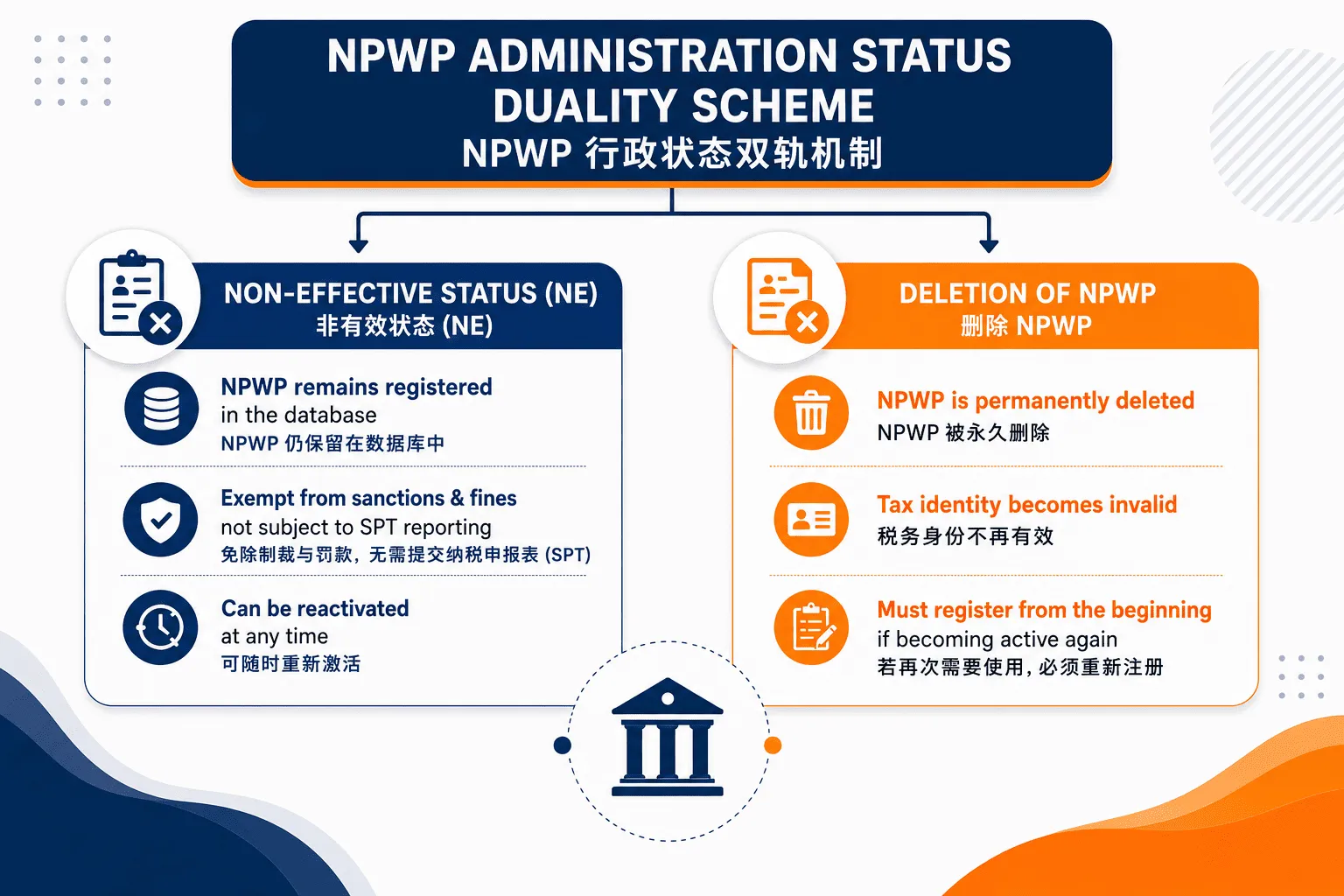
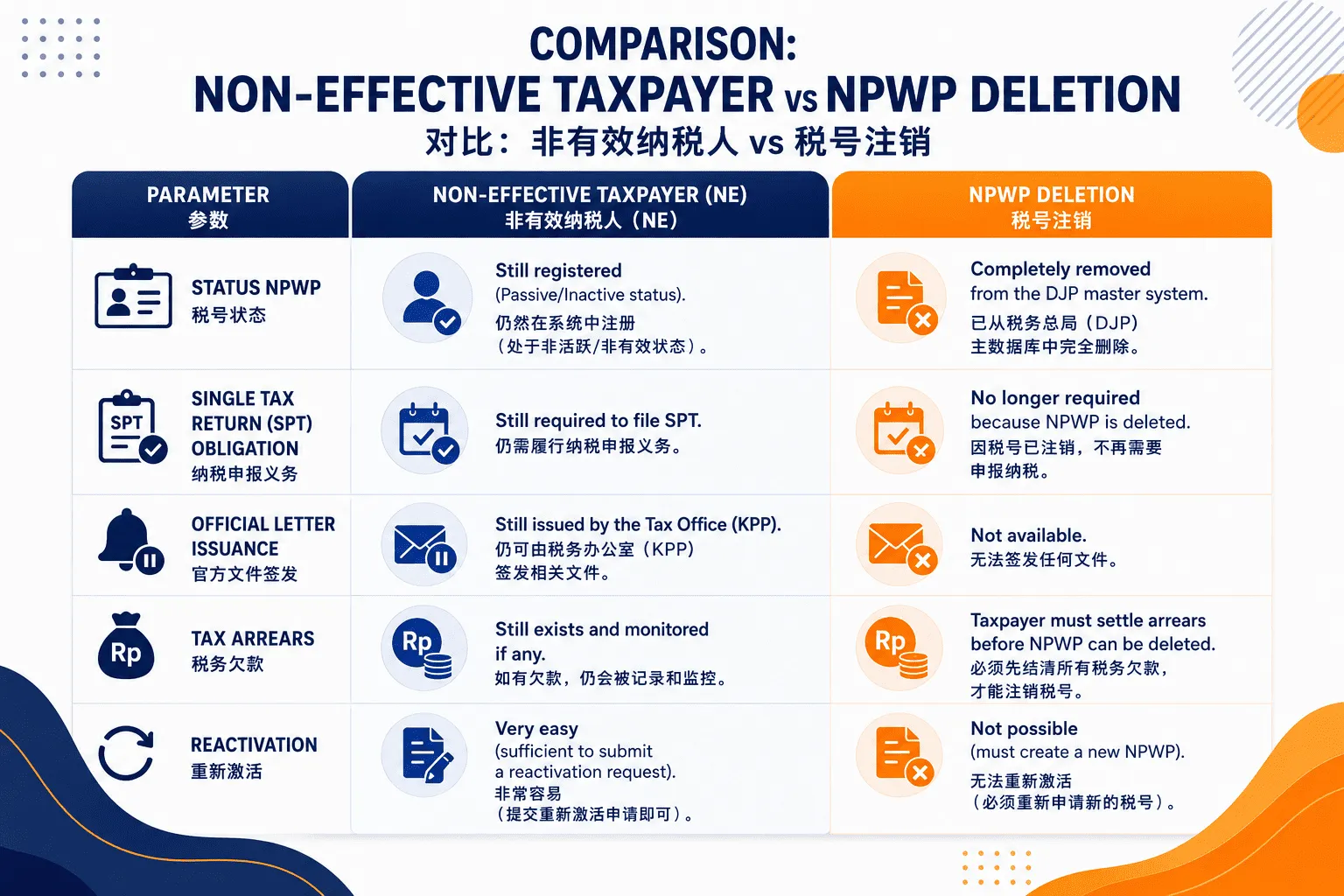
The crucial point to remember is: NE status is different from NPWP Deletion. In NE status, your tax rights and identity are only "frozen" temporarily and can be restored when the business resumes operations.
Legal Basis for NE Status Determination
The policy and criteria for determining Non-Effective Taxpayer status are regulated by a set of official government regulations:
- Minister of Finance Regulation Number 147/PMK.03/2017: Regulates registration procedures, NE determination, and NPWP deletion.
- Director General of Taxes Regulation Number PER-04/PJ/2020: Technical guidelines for NPWP administration, Electronic Certificates, and PKP confirmation.
- Minister of Finance Regulation Number 81 of 2024: Administrative tax adjustments based on the Coretax system which adopts the term Non-Active Taxpayer.
Criteria for Determining Non-Effective Status
The DJP does not determine NE status arbitrarily. There are measurable indicators for both Corporate and Individual categories:
1. Corporate Taxpayers (Companies / PT / CV)
- Companies that have ceased all commercial operational activities but have not yet completed the legal dissolution process.
- Companies that are in the process of liquidation or bankruptcy.
- Business entities that have not submitted Periodic/Annual SPT for 2 consecutive years and whose address cannot be located.
2. Individual Taxpayers
- Freelancers or business owners who have gone bankrupt.
- Workers who no longer have income or whose income is below the Non-Taxable Income (PTKP) threshold.
- Taxpayers who reside or are domiciled abroad for more than 183 days within a 12-month period.
Comparison: Non-Effective Taxpayer vs NPWP Deletion
To avoid errors in determining your business's administrative steps, here are the fundamental differences:
Legal Consequences of Having NE Status
Applying for NE status carries several logical consequences for taxpayers:
- Exemption from SPT Late Penalties: As long as NE status is active, you will not be subject to administrative fines for not submitting Annual SPT.
- No Warning Letters: The KPP system disables the function of issuing automatic reminder letters regarding periodic reporting obligations.
- Tax Debt Responsibility Remains: NE status does not eliminate tax receivables or sanctions issued before the date of the NE determination decision.
Procedures for Applying for NE Status
Non-Effective status determination can be pursued through two main channels:
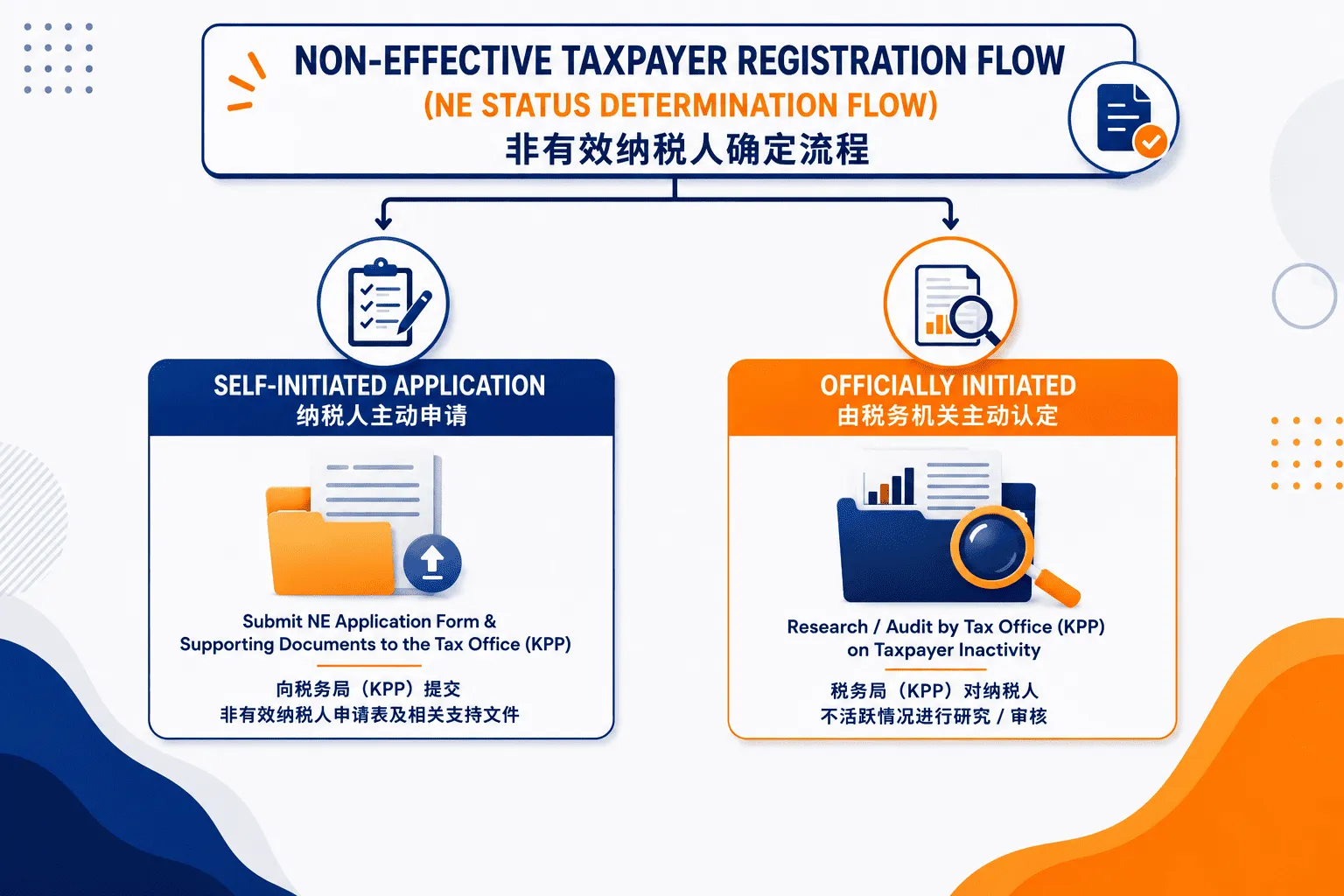
- Self-Application: The Taxpayer fills out the NE Application Form and submits it to the registered KPP along with supporting documents (such as a Certificate of Business Cessation from the village/competent authority).
- Ex-Officio Determination: The DJP automatically determines NE status based on the analysis of e-Coretax data if the taxpayer is proven inactive for a certain period.
FAQ About Non-Effective Taxpayers
Can a company with NE status issue e-Faktur?
No. A company with NE status cannot transact to create Tax Invoices before applying for reactivation of its tax status.
Can an NPWP with NE status be reactivated?
Yes. If your business resumes operations, you simply need to submit a Taxpayer Reactivation Application to the registered KPP to fully reactivate the NPWP.
Is NE status the same as company dissolution?
No. NE status only regulates the tax administration side. Company dissolution requires a separate legal process such as Liquidation and Deed Revocation at the Ministry of Law and Human Rights.
Manage Tax Compliance and Business Legality with Awan Kusuma Legalitas
Ensuring your company's tax status remains legally compliant is essential to avoid sanctions and administrative issues in the future.
If your company experiences changes in operational landscape, whether planning restructuring, business closure, or opening a new business, the Awan Kusuma Legalitas consultant team is ready to assist in comprehensively organizing your business legal structure. Our services include PT Establishment, NIB licensing management, Annual SPT reporting assistance, and the legal process of PT Dissolution/Liquidation.
Want to consult about your company's tax status or business legality needs? Contact the Awan Kusuma Legalitas Team via WhatsApp now for professional handling!